

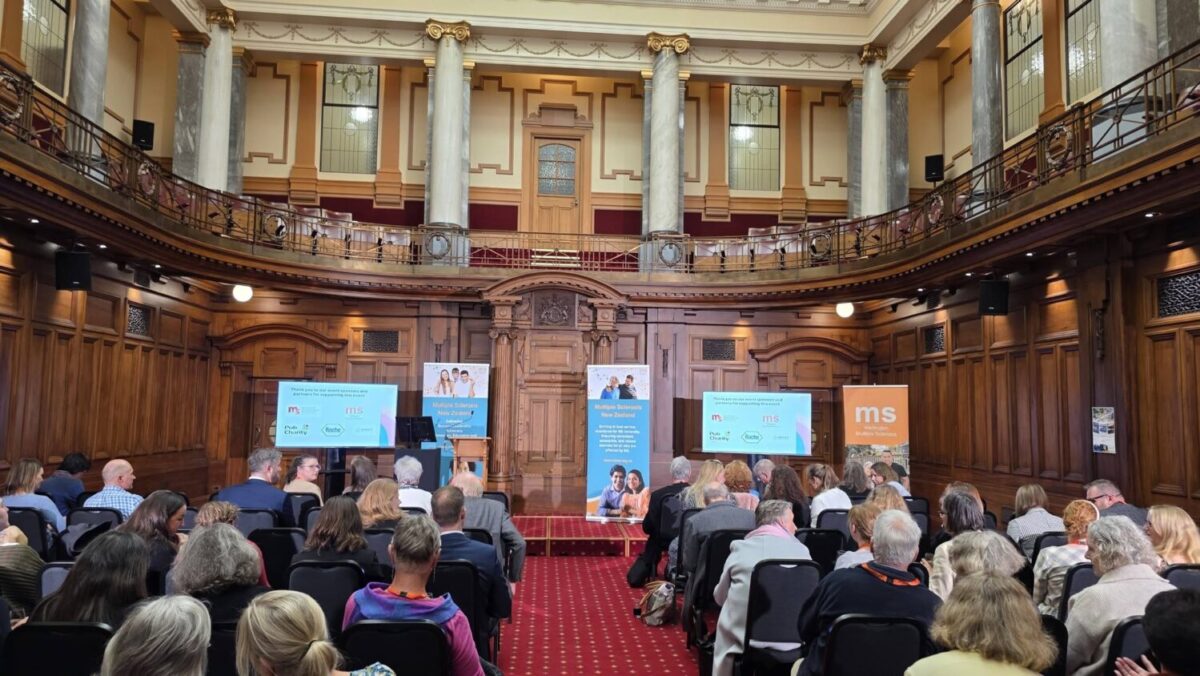
The neurology workforce crisis: The data can no longer be ignored
 Professor Anna Ranta, leading neurologist and researcher at the University of Otago, Wellington, shared the findings from a landmark national workforce study published in BMJ Neurology Open. The report paints a grey picture, one of a system under severe and widening strain. The issue doesn’t just impact people with MS, but 1:3 New Zealanders who will be impacted by a neurological condition.
In 2024, New Zealand had just 83 neurologists across public and private practice, providing 67.3 full-time equivalents. That equates to one adult neurologist per 74,000 people. This is nearly half the rate of Australia, and a fraction of the one-per-28,000 ratio considered international best practice. To meet current demand alone, New Zealand needs 98 FTE neurologists. By 2026, that figure rises to over 122.

The deficit and consequences are being felt across the country. Nearly a quarter of all ED presentations are neurological in nature, yet the majority of those patients never see a neurologist. Patients with complex, or early signs of neurological conditions, are being pushed back into primary care after a single appointment, or having referrals declined altogether, because there simply is not enough specialist capacity to see them.
New Zealand currently trains just four to five new neurologists per year, a rate that is wholly inadequate to meet present demand, let alone future need. Our advocacy calls for a minimum of nine new neurologists trained per year, with genuine career pathways to retain them here in Aotearoa.
Professor Ranta’s message was measured, evidence-based, and unambiguous: this is a solvable problem, but only if action is taken now. The pipeline for training specialist neurologists is long. Every year of delay widens the gap further, and it is patients who pay the price.
The invisible burden: recognising cognitive change in MS
Our second guest speaker, Professor Hanneke Hulst, the new Professor of Brain Research and Director of the Centre for Brain Research at the University of Auckland, shared her insights with both lived experience and research about the impacts of cognitive changes in MS, and the importance of early identification and support. While cognitive symptoms are often the hardest to see, and therefore hardest to address, there are things we can do to monitor and manage.
Her message: Don’t be late. We can’t wait for symptoms to become visible before we act.
Multiple sclerosis is frequently understood through what is visible and measurable. MRI scans, relapses, physical function. Yet for a significant proportion of people living with MS, the most disruptive impacts are invisible: changes in memory, processing speed, recall that quietly erode the ability to work, parent, connect, and participate in everyday life.
The statistics are striking. While around 74% of people living with MS will have no cognitive symptoms at the time of diagnosis, research shows that within five years, up to 50% will develop mild to moderate cognitive impairment. MS does not affect intelligence, but it can affect the speed and ease of thinking in ways that are profoundly disruptive and consistently underestimated.

Crucially, these symptoms are often subtle enough to go unnoticed, or to be rationalised away. Forgetfulness, difficulty concentrating, slowed thinking: in a busy life with work and family, it is easy to attribute these changes to stress or tiredness rather than to MS. The result is that cognitive impairment frequently goes unrecognised, undiscussed, and unsupported within the healthcare system, even when it is quietly reshaping someone’s entire experience of life.
Recognising this invisible burden earlier and responding to it is both a moral and economic imperative. Don’t be late.
Some other aspects, or symptoms of MS, such as mental health and fatigue, two factors that are highly prevalent in MS, must be monitored alongside cognition, as they both directly influence how cognitive symptoms present and progress. Addressing them together is essential to accurate assessment and effective support.
Her core messages:
- We need to normalise cognitive symptoms in MS.
- We need to talk about them openly, at the time of diagnosis and regularly thereafter.
- Monitoring must begin early not once impairment is entrenched.
- Support must be offered proactively to help people maintain what matters most: their work, their relationships, their hobbies, connecting with their community, their sense of self.
For people living with MS: if you have noticed changes in your thinking or memory, however subtle, speak with your health team. These changes are real, they are recognised, and there is support available. Ask your neurologist or MS nurse about cognitive monitoring and keep the conversation going.
The two presentations connected intrinsically. Early and timely diagnosis and regular monitoring requires a neurology workforce with the capacity to provide it. As the data makes clear, that capacity does not currently exist at the scale New Zealand needs, making the workforce crisis not just a health system problem, but a direct barrier to better MS care.
The evening at Parliament was not simply a gathering but an opportunity for us to signal that New Zealand’s MS and neurology communities are united, the evidence is clear, and the cost of inaction is real. We look forward to continuing this conversation with decision-makers, and to the meaningful change that people living with MS and other neurological conditions in Aotearoa deserve.
Last Updated June 11, 2026